The following information is extracted from the Independent Market Research Report titled “The Marine Transportation and Support Services of the Oil and Gas Industry in Malaysia” prepared by Vital Factor Consulting Sdn. Bhd. for inclusion in the Prospectus of E.A. Technique (M) Berhad dated 24 November 2014.
The report focuses on product tankers, offshore support vessels and port marine services within the marine transportation and support services segment for the oil and gas industry to reflect E.A. Technique Group's main business activities. All references to tankers in the report refer to marine based tankers unless specified otherwise. All references to ports and terminals refer to sea ports and terminals.
Overview of The Oil and Gas Industry
Industry Structure

The overall oil and gas industry is segmented into upstream, midstream and downstream sectors.
Supporting services comprise a diverse range of services that facilitate operations and to support oil and gas companies and contractors in the upstream, mid-stream and downstream sectors of the oil and gas industry. They include, among many others, drilling, geological studies, extraction, fabrication, marine transportation, hook-up and commissioning services, platform maintenance and manpower supply.
The marine transportation and support services cover the transportation of personnel, equipment and supplies as well as extracted oil and gas, and refined petroleum products over water. Marine transportation and support services are used in the upstream, midstream and downstream sectors of the oil and gas industry.
EA Technique Group operates within the marine transportation and support services segment where their customers operate primarily in the upstream and downstream segments of the oil and gas industry. This includes the following:
The provision of product tankers to transport refined petroleum products.
The provision of offshore support vessels (OSV) through the use of fast crew boat for the transportation of personnel.
The provision of port marine services through the use of tugboats for towing and mooring of vessels and other floating structures within port areas.
Within the oil and gas industry, a small proportion of the Group's activities is also involved in the provision of floating storage unit (FSU), and liquefied petroleum gas (LPG) tankers.
Marine Transportation and Support Services
Overview
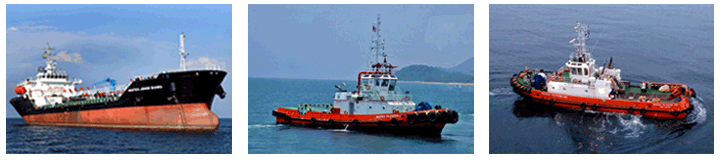
Marine transportation for the oil and gas industry is primarily focussed on tankers and offshore support vessels (OSV).
Tankers are used for transportation of oil and gas from one location to another.
OSV on the other hand is used for the transportation of goods and people, as well as to support a wide range of offshore activities including the following:
towage, positioning and mooring of structures and barges;
installation, maintenance and repair of structures including rigs, platforms, FPSO, mooring systems, pipelines and subsea structures;
hook-up and commissioning;
operation of exploration, appraisal, development and production facilities;
seismic surveys and subsea works.
Other marine vessels whose primary functions are not transportation include floating storage unit (FSU), floating production storage and offloading (FPSO), mobile offshore production unit (MOPU) and drillship.
Product Tankers
Typically, tankers are used to transport bulk oil and gas comprising crude oil, refined petroleum products, Liquefied Natural Gas (LNG) and Liquefied Petroleum Gas (LPG).
There are essentially two types of product tankers:
Clean petroleum product (CPP) tankers are designed to carry refined petroleum products such as jet fuel, gasoline and naphtha.
Dirty petroleum product (DPP) tankers refer to vessels that are designed to carry heavy fuel oils or sometimes also crude oil.

Offshore Support Vessels
OSV play an important role in supporting offshore oil and gas activities in upstream exploration, appraisal, development and production activities, as well as midstream activity of pipeline transportation of hydrocarbons. The types of OSV commonly used are listed in the diagram below:

Note: Crew boats are used by E.A. Technique Group. Tugboats are used by E.A. Technique Group to provide port marine services.
Port Marine Services
-
Port marine services are conducted to ensure safe and expeditious flow of traffic as vessels approached the berth. Towage, pilotage and mooring services are the main marine services conducted at ports. Harbour tugs are used for the provision of towing services at port. They are used to move vessels within the port areas due to crowding and the shallower water depth in port areas.
The Oil and Gas Industry in Malaysia
Oil and Gas Reserves and Production
Growth in hydrocarbon reserves and production indicates a continuing effort in carrying out exploration, appraisal, development and production activities, which should provide opportunities for offshore oil and gas supporting service providers including the marine transportation and support services segment.
| Oil and Gas Reserves in Malaysia | ||||||
|---|---|---|---|---|---|---|
| 1 Jan 2010 | 1 Jan 2011 | 1 Jan 2012 | 1 Jan 2013 | 1 Jan 2014 | AAGR 2010-14 (%) |
|
| Total Reserves | 20.6 | 20.9 | 21.3^ | 22.2^ | 22.6 | 2.4 |
| - Crude Oil and Condensates | 5.8 | 5.9 | 6.0 | 5.9 | 5.8 | 0.0 |
| - Natural Gas | 14.8 | 15.0 | 15.4 | 16.4 | 16.8 | 2.8 |
| ^ Total does not add-up due to rounding; | |
| Note: | All units in billion barrels of oil equivalent (BOE), except for percentages. |
| (Source: PETRONAS) | |
Investment in Exploration, Development and Production of Oil and Gas
-
The level of investment made in the upstream sector is one of the factors used to assess the demand for, among others, the marine transportation and support services sectors. This is because part of the investment is channelled to the engagement of services rendered by supporting services providers.
| * Based on 9 months period; | |
| Note: | AAGR between March 2007 and March 2011. |
| (Source: PETRONAS) | |
Oil and Gas Fields in Malaysia
The number of oil and gas fields in Malaysia has a direct bearing on demand for marine transportation and support services. A high number of operating oil and gas fields would mean a sustainable level of hydrocarbons would need to be refined and processed. This would create demand for refined products to be transported and shipped to various locations. Similarly, OSV are required to service the needs of rigs, platforms and other offshore structures, therefore any increases in operational oil and gas fields would mean a higher demand for OSV.
| Note: | AAGR between March 2007 and March 2011. |
| (Source: PETRONAS) | |
Recent Oil and Gas Discoveries in Malaysia
Recent discoveries of oil and gas in Malaysia are positive developments for the industry. Development work to bring these fields into production would result in an increase in demand for, among others, marine transportation and support services.
Production Sharing Contract (PSC) and Risk Service Contract (RSC)
PSC and RSC contractors and operators are target customers of offshore oil and gas supporting services providers. As such, a growth in the number of PSC and RSC in operation and the award of new PSC and RSC indicates an expanding potential customer base for offshore oil and gas supporting services providers.
Exports of Oil and Gas Products
External demand, via exports, for oil and gas products would also have an impact on the demand for upstream activities, which in turn would affect the demand for offshore oil and gas supporting services.
| Export Value of Selected Oil and Gas Products | ||||||
|---|---|---|---|---|---|---|
| 2009 | 2010 | 2011 | 2012 | 2013 | AAGR 2009-13 (%) |
|
| Petroleum Crude Oils and Crude Oils Obtained from Bituminous Minerals | ||||||
| Export Value | 25.6 | 31.0 | 33.4 | 32.3 | 32.2 | 5.9 |
| Refined Petroleum Products | ||||||
| Export Value | 19.4 | 25.5 | 33.0 | 47.6 | 61.3 | 33.3 |
| Residual Petroleum Products & Related Materials | ||||||
| Export Value | 1.0 | 1.6 | 1.3 | 2.2 | 2.1 | 20.7 |
| Natural Gas (Whether or Not Liquefied) | ||||||
| Export Value | 31.2 | 38.7 | 52.0 | 55.5 | 59.2 | 17.4 |
| Liquefied Propane and Butane | ||||||
| Export Value | 1.8 | 1.7 | 2.3 | 1.2 | 0.9 | -16.0 |
| Petroleum Gases & Other Gaseous Hydrocarbons | ||||||
| Export Value | 2.7 | 3.2 | 3.5 | 3.8 | 4.1 | 11.3 |
| Note: | All units in RM billion except percentages; |
| Propane and butane are LPG. | |
| (Source: Department of Statistics Malaysia) | |
Supply and Demand for Marine Vessels
Number of Selected Ships Registered in Malaysia
Growth in the number of vessels registered in Malaysia provides an indication on the demand and supply for vessel chartering services.
| Number of Selected Vessels Registered in Malaysia | ||||||
|---|---|---|---|---|---|---|
| 2009 | 2010 | 2011 | 2012 | 2013 | AAGR 2009-13 (%) |
|
| Oil Tankers (1) | 205 | 193 | 209 | 215 | 206 | 0.1 |
| LNG and LPG Carriers | 47 | 45 | 43 | 41 | 40 | -4.0 |
| Chemical / Product Tankers | 52 | 51 | 66 | 63 | 53 | 0.5 |
| OSV | 218 | 207 | 251 | 249 | 256 | 4.1 |
| Tugboats | 966 | 904 | 1,042 | 1,077 | 1,058 | 2.3 |
Note:
| (1) | While the majority are for crude oil tankers, some product tankers are also registered under this category |
| (Source: Ministry of Transport Malaysia) | |
Domestic Shipping Licence
Licences from the Domestic Shipping Licensing Board are required for the shipping of goods, unless exempted. Listed below are statistics on the number of domestic shipping licences issued to Malaysian and foreign registered vessels for selected types of cargo that are common in the oil and gas industry:
| Licences Issued by the Domestic Shipping Licensing Board for Selected Types of Cargo to Malaysian and Foreign Registered Vessels | ||||||
|---|---|---|---|---|---|---|
| 2009 | 2010 | 2011 | 2012 | 2013 | AAGR 2009-13 (%) |
|
| Petroleum / Diesel | ||||||
| Malaysian Registered | 195 | 200 | 214 | 211 | 204 | 1.1 |
| Foreign Registered | 370 | 470 | 542 | 686 | 731 | 18.6 |
| Towing Services | ||||||
| Malaysian Registered | 507 | 547 | 587 | 622 | 634 | 5.7 |
| Foreign Registered | 590 | 578 | 496 | 601 | 561 | -1.3 |
| Exploration Work Equipment | ||||||
| Malaysian Registered | 100 | 153 | 161 | 172 | 191 | 17.6 |
| Foreign Registered | 417 | 557 | 585 | 902 | 908 | 21.5 |
| (Source: Ministry of Transport Malaysia) |
Between 2009 and 2013, the number of licences issued to Malaysian and foreign registered vessels for the selected types of cargo above, with the exception of foreign registered towing services vessels, has registered growth in terms of AAGR. The consistent growth in the number of domestic shipping licences indicates a robust marine transportation segment servicing the oil and gas industry in Malaysia.
Ships Reporting under STRAITREP
The Mandatory Ship Reporting System in the Straits of Malacca and Singapore (STRAITREP) was proposed by Indonesia, Malaysia and Singapore. Masters of vessels passing by the Straits of Malacca and Singapore are required to report to the relevant authorities.
| Selected Ships Reporting under STRAITREP | ||||||
|---|---|---|---|---|---|---|
| 2009 | 2010 | 2011 | 2012 | 2013 | AAGR 2009-13 (%) |
|
| VLCC / Deep Draft | 4,221 | 4,333 | 4,539 | 4,732 | 4,825 | 3.4 |
| Tanker Vessel | 16,398 | 16,247 | 16,233 | 17,345 | 18,296 | 2.8 |
| LNG and LPG Carrier | 3,330 | 3,579 | 3,830 | 4,014 | 4,248 | 6.3 |
| Tug / Tow | 598 | 545 | 414 | 529 | 563 | -0.8 |
| (Source: Marine Department of Malaysia) |
Between 2009 and 2013, the number of selected ships reporting under STRAITREP has increased, with the exception of tug/tow boat. The continuing growth indicates increasing demand for such ships in the Straits of Malacca and Singapore.
Demand Dependencies of Marine Transportation and Port Marine Services
Liquid Bulk Cargo Throughput at Malaysian Ports
Liquid bulk cargo includes crude oil, petroleum (including clean and dirty products), LNG, LPG, crude palm oil, palm oil-based products, and chemicals in liquid form. As such, the following statistics on liquid bulk cargo throughput Malaysian ports are used to assess the demand dependencies for liquid bulk carriers such as petroleum tankers (including CPP tankers) and LPG tankers, as well as provision of port marine services focusing on towage of vessels in and out of ports.
| Liquid Bulk Cargo Throughput at Malaysian Ports | ||||||
|---|---|---|---|---|---|---|
| 2009 | 2010 | 2011 | 2012 | 2013 | AAGR 2009-13 (%) |
|
| Foreign Trade | 55.1 | 58.4 | 60.4 | 46.9 | 48.8 | -3.0 |
| Local Trade | 17.3 | 17.1 | 19.0 | 19.6 | 20.3 | 4.1 |
| Note: | All units are in million freight weight tonnes (FWT) except percentages. |
| (Source: Ministry of Transport Malaysia) | |
Selected Oil and Gas Products Loaded and Unloaded at Malaysian Ports
The loading and unloading of petroleum and fuel oil provides an indication of the demand for product tankers for transportation purposes as well as provision of port marine services focusing on towage of vessels in and out of ports.
| Petroleum and Fuel Oil Loaded and Unloaded at Malaysian Ports | ||||||
|---|---|---|---|---|---|---|
| 2009 | 2010 | 2011 | 2012 | 2013 | AAGR 2009-13 (%) |
|
| Petroleum and Fuel Oil | ||||||
| Loaded | 11.7 | 11.4 | 10.5 | 10.2 | 11.3 | -0.9 |
| unloaded | 18.0 | 15.4 | 17.9 | 19.3 | 19.1 | 1.5 |
| Total | 29.7 | 26.8 | 28.4 | 29.5 | 30.4 | 0.6 |
| Note: | All units are in million FWT except percentages. |
| (Source: Ministry of Transport Malaysia) | |
Number of Ships Calling by Ports
E.A. Technique Group's port marine services, particularly towing services, are focused at the following ports in Malaysia:
Northport in Klang, Selangor, which is a bulk and containerised goods port;
Sungai Udang Port in Malacca, which is mainly an oil and gas port;
Kertih Port in Terengganu, which is mainly an oil and gas terminal.
The number of ships calling in various ports in Malaysia will provide an indication on the demand for port marine services particularly for towage.
| Number of Ships Calling by Selected Ports | ||||||
|---|---|---|---|---|---|---|
| 2009 | 2010 | 2011 | 2012 | 2013 | AAGR 2009-13 (%) |
|
| All Ports in Malaysia | 60,393 | 63,942 | 64,607 | 66,848 | 62,669 | 0.9 |
| Klang | 15,356 | 17,910 | 18,117 | 17,808 | 16,724 | 2.2 |
Notes:
| (1) | Northport is categorised under Klang Port which also include Westport |
| (2) | There are no separate statistics for Sungai Udang and Kertih Port as they are private ports |
| (Source: Ministry of Transport Malaysia) | |
Oil Refineries in Malaysia
Growth in the capacity of oil refineries in Malaysia will have a direct and positive flow-on effect on demand for product tankers.
Growth in the capacity of oil refineries in Malaysia is mainly derived from Refinery and Petrochemical Integrated Development (RAPID) developed by PETRONAS, is part of the Pengerang Integrated Petroleum Complex (PIPC). Upon commencement of operation, capacity of RAPID will represent 56% of existing capacity. As such, RAPID coming on-stream would be the main drivers of growth.
Production of Refined Petroleum Products
The level and growth of the output of refined petroleum products have a direct impact on the demand for product and LPG tankers as they all will need to be transported to various ports in Malaysia as well as overseas. The overall growth in sales value of manufactured refined petroleum products between 2009 and 2013 would provide a strong support base for product and LPG tankers.
| (Source: Department of Statistics Malaysia) |
Consumption Of Automotive Fuel
As E.A. Technique Group's product tanker operations are focused on the carriage of refined petroleum products including automotive fuel in Malaysia, demand for their product tankers is dependent on the consumption of automotive fuel in Malaysia.
| Retail Sales of Automotive Fuel | ||||||
|---|---|---|---|---|---|---|
| 2009 | 2010 | 2011 | 2012 | 2013 | AAGR 2009-13 (%) |
|
| Sales Value | 16.4 | 17.0 | 19.9 | 21.5 | 23.6 | 9.6 |
| Note: | All units in RM billion except percentages |
| (Source: Department of Statistics Malaysia) | |
Demand Dependencies of OSV
Demand for OSV is primarily dependent on the level of activities associated with the offshore upstream and midstream sectors of the oil and gas industry, which includes exploration, appraisal, development, product and pipelines. Such demand dependencies would include, among others:
Oil and gas reserves and production;
Investment in exploration, development and production;
Operational oil and gas fields;
Oil and gas discoveries;
Production sharing and risk service contracts;
Exports of oil and gas products.
As Malaysia's oil and gas industry is mainly offshore, the above demand dependency factors would have direct relevance to the OSV sector.
Competitive Analysis

Nature of Competition in the Industry
Operators wishing to participate in the oil and gas industry are subjected to certain conditions imposed by PETRONAS where only operators that are licenced or registered by PETRONAS are allowed to bid directly for work provided by PETRONAS, PSC and RSC operators and contractors in the oil and gas industry in Malaysia.

Operators in the Industry
In 2013, there were approximately 100 OSV contractors and 200 marine vessel (mainly tankers) service providers to the oil and gas industry in Malaysia (Source: Malaysia Petroleum Resources Corporation; Malaysian Investment Development Authority). With the relatively large number of operators in the industry, no single operator or group of operators currently dominate the industry, or is in a position to dictate pricing.
-
The major operators that own and/or operate product tankers in Malaysia coastal waters include the following (listed in alphabetical order):
E.A. Technique Group;
Gagasan Carriers Sdn Bhd;
Global Carriers Berhad;
Grolite Shipping Sdn Bhd;
Hong Lam Marine Pte Ltd;
Malaysian Bulk Carriers Berhad;
Orkim Sdn Bhd;
Semua Shipping Sdn Bhd.
-
The major operators of the provision of towing services at ports in Malaysia include the following (listed in alphabetical order):
Alam Maritim (M) Sdn Bhd;
KBH Marine Industry Sdn Bhd;
E.A. Technique Group;
Fast Meridian Sdn Bhd;
Malaysia Towage and Transport Sdn Bhd.
Note: This is not an exhaustive list. (Source: Vital Factor Consulting)
| Note: | This is not an exhaustive list. This list does not include port operators that provide towing services within their respective ports. This list includes operators that use various types of vessels, for example AHT/S, utility vessels and harbour tugs. |
| (Source: Vital Factor Consulting) | |
Market Size and Share
Market Size
a) Product Tankers
As at October 2014, the market size for product tankers registered in Malaysia that carry third party products was estimated at 65 product tankers (Source: Vital Factor Consulting).
b) Towing Services
In 2013, the market size for towing services in Malaysia based on number of licences issued by Domestic Shipping Licensing Board for the provision of towing services was approximately 1,200 licences (Source: Ministry of Transport Malaysia).
Market Share
a) Product Tankers
As at October 2014, E.A. Technique Group had an estimated market share of 8% of product tankers registered in Malaysia based on the number of vessels owned and operated by the Group (Source: Vital Factor Consulting).
As at October 2014, E.A. Technique Group's market share based on contracted product tankers was estimated at 8% (Source: Vital Factor Consulting).
As at October 2014, there were an estimated 25 operators of locally registered product tankers. The top four operators of locally registered product tankers accounted for approximately half the market share of product tankers in Malaysia based on the number of product tankers registered in Malaysia, of which E.A. Technique Group is one of these top four operators (Source: Vital Factor Consulting).
b) Towing Services
As at October 2014, E.A. Technique Group had an estimated market share of 2% of towing services in Malaysia based on the number of tugboats and mooring boats used for towing, that are owned and operated by the Group (Source: Vital Factor Consulting).
Threat of Substitutes

Product Tankers
Pipelines are substitutes for all types of tankers including product tankers. However, it is not a practical substitute for product tankers as the cost of building a network of refined petroleum product pipelines to connect multiple sources and destinations is economically prohibitive.
Land based product tankers using roads and rail are substitutes for marine based product tankers. Land based product tankers, especially road based product tankers are able to transport small amounts of refined petroleum products to various end-user premises and retail petrol stations in many locations which are not possible for marine based product tankers. However, marine based product tankers have economies of scale advantage as the volume of refined petroleum products carried by marine based product tankers is significantly larger compared to those carried by land based product tankers, especially road based product tankers. As such, land based product tankers coexist with marine based product tankers, and each serve different purposes and market segments.
Offshore Support Vessels
There are not many practical substitutes for the use of OSV to support the offshore oil and gas industry as OSV provides the most cost effective means of transportation and towage to support various offshore activities. One possible substitute is the use of non-scheduled aviation services, in particular helicopter services. However this form of transportation is only restricted for the transportation of limited personnel and goods only. Using aviation services is significantly more expensive compared to the use of OSV, and would normally only be used for emergency, urgent matters or for key personnel.
Port Marine Services
There are no substitutes for the provision of port marine services in the form of towage, pilotage and mooring of large vessels in port areas. This is because tugboats are required to manoeuvre large vessels in ports that are commonly crowded with various types of vessels moving in and out of the port area.
Industry Prospects and Outlook
The prospects and outlook of the marine transportation and support services in the longer term are expected to be favourable based on the following factors:
External Factors
Global Economic Conditions
Market Price of Petroleum
Future Petroleum Prices
Internal Factors
Production of Oil and Gas Products
Exploration and Production Spending
Economic Transformation Programme (ETP)
Development of Oil and Gas Hub in Southern Johor
Threats and Risk Analysis of Marine Transportation and Support Services
Global Economic Slowdown
Pirate Attacks
Oil Spill from Tankers
Sustained Fall in Market Price of Hydrocarbons
Depletion of Hydrocarbon Reserves
Liberalisation of the Cabotage Policy
Implementation of Goods and Services Tax
Critical Success Factors
Providers of marine transportation and support services operate within a competitive environment where there are a large number of operators. While there are many factors affecting business operations, some factors that are critical to the long-term sustainability and growth of businesses within the segment are as follows:
PETRONAS Licensing and Registration
Compliance with International Standards
Good Health, Safety and Environment (HSE) Management Track Record
Effective Management of Fleet of Vessels
Established Track Record and Market Reputation
Strong Financial Position
* Please read this section in conjunction with the Section 7 from page 98 to page 149 of E.A. Technique (M) Berhad’s Prospectus dated 24 November 2014.